Poverty is not a character flaw

I wrote about the government shutdown for Al Jazeera English:

In 1964, President Lyndon B. Johnson declared a War on Poverty. Over the next half century, the war on poverty turned into a war on the poor. This war was once disguised as “compassionate conservatism” and debated with words like “responsibility” and “opportunity”.

Compassionate conservatism assumed that we could take care of ourselves so we did not need to take care of each other. It was an attractive concept, simultaneously exalting the successes of America while relieving the individual of responsibility for those whom it failed. Many good people believed in it.

Today the attack on the poor is no longer cloaked in ideology – it is ideology itself. This ideology is not shared by most Americans, but by those seeking to transform the Republican Party into, as former GOP operative Mike Lofgren describes it, “an apocalyptic cult, or one of the intensely ideological authoritarian parties of 20th century Europe.”

These are the people who have decided that poor children should be denied food as a result of elected officials wanting poor people to have healthcare.

The government shutdown only formalises the dysfunction that has been hurting ordinary Americans for decades. It is not a political shutdown but a social breakdown. Fixing it requires a reassessment of value – and values.

When wealth is passed off as merit, bad luck is seen as bad character. This is how ideologues justify punishing the sick and the poor. But poverty is neither a crime nor a character flaw. Stigmatise those who let people die, not those who struggle to live.

Read: “A government shutdown, a social breakdown”

Posted in Uncategorized | 4 Comments

My writing on the U.S. economy

I write about a lot of different topics, but nothing has struck a nerve like my articles on the U.S. economy. The government shutdown only formalizes the dysfunction that has been hurting ordinary Americans for years. When wealth is passed off as merit, bad luck is seen as a character flaw. This is how America justifies punishing the sick and the poor. This is the root of the government shutdown.

Below, my writing on the economy from the past year:

Zero opportunity employers (9/23/13)
Who is a ‘journalist’? People who can afford to be (9/17/13)
Mothers are not ‘opting out’ — they are out of options (8/19/13)
When MOOCs profit, who pays? (7/29/13)
The American dream: Survival is not an aspiration (7/22/13)
In defense of complaining (6/15/13)
The millennial parent (5/29/13)
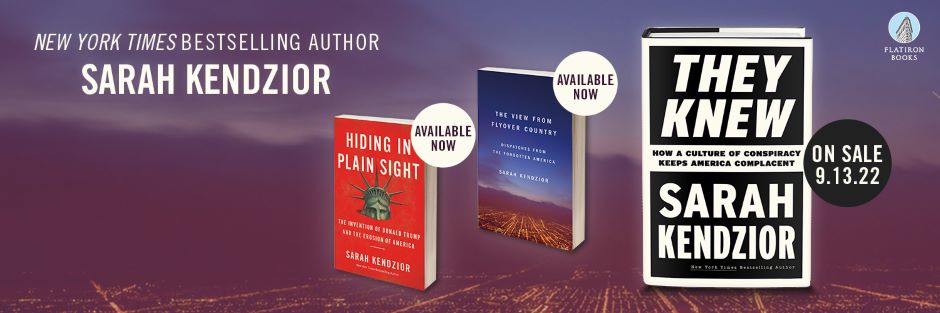
The view from flyover country (5/12/13)
Meritocracy for sale
 (5/3/13)
Academia’s indentured servants (4/11/13)
Managed expectations in the post-employment economy (3/11/13)
The unaffordable baby boomer dream (2/26/13)
The price of inequality in higher education (12/23/12)
The closing of American academia (8/20/12)

Posted in Uncategorized | 3 Comments

Land of lost opportunity

My latest:

In America, there is little chance at a reversal of fortune for those less fortunate. Poverty is a sentence for the crime of existing. Poverty is a denial of rights sold as a character flaw.

There are two common responses to the plight of the low-wage worker. The first is “That’s just the way things are”, a response which serves both to derail empathy and deter people from imagining the way things could be.

The second is “But it worked out for me.” This is the refrain of the tenured to the adjunct, the staff to the freelancer, the rich to the poor: “But it worked out for me; the system is fine, it worked out for me.”

The problem is that in an economy of falling wages and eroded safety nets, there is a very fine line between “you” and “me”.

People not only fall through the cracks, they live in the cracks as a full-time occupation. The view from the cracks is a lot clearer than the view from above. When you look down on people, they stop being people. But when you watch from below, you see how easy it is to fall.

Personal success does not excuse systematic exploitation. “That’s just the way things are” does not explain widespread suffering. Ask why things are the way they are, why things are not working out for working Americans.

And when they do not give you an answer? Start demanding one.

Read the whole thing, Zero Opportunity Employers, at Al Jazeera English

Posted in Uncategorized | 5 Comments

On journalistic privilege and privileged journalists

My latest for Al Jazeera English is on the Senate’s attempt to define who is a “journalist” in the aftermath of Wikileaks. Under the proposed law, a journalist will be “an employee, independent contractor or agent of an entity that disseminates news or information … [who has been] employed for one year within the last 20 years or three months within the last five years.”

I find this problematic for a number of reasons:

The debate over who is a journalist is a debate over journalistic privilege. But in a prestige economy, the privilege to protect the confidentiality of sources is not the only privilege at play.

Journalism is increasingly a profession only the wealthy can enter. To narrow the definition of “journalist” to those affiliated with established news organisations denies legal protection not only to organisations like WikiLeaks, but also to the writers and bloggers who cannot afford the exorbitant credentials and unpaid internships that provide entry into the trade.

“The journalists who can tell my story – the story of urban or inner-city America – have taken a job in marketing while disseminating their opinions on blogs,” writes freelancer David Dennis. Since the recession began in 2008, racial diversity in the media has declined while gender imbalance has remained high. The bloggers to whom Dennis refers would have no legal protection under the Senate’s definition.

Whom would the Senate’s definition protect? Journalists employed at established publications, who are mainly white men from privileged backgrounds – a category of people who may have little interest in critiquing the establishment that benefits them. The Senate’s definition of journalist protects the people who need it least.

Read the whole thing, Who is a ‘journalist’? People who can afford to be, at Al Jazeera English.

In other news, a few upcoming talks and a new column:

  • From Sept 25-27, I’ll be in DC to speak at a George Washington University workshop on “Media and Democratization in Post-Soviet Nations”. I’ll be talking about Uzbek dissident online media and politics.
  • On October 24, I’ll be giving at talk at the University of Illinois at Urbana-Champaign on “How (and Why) to Write for the Public”.
  • I will be writing a monthly column for Vitae, a new section of the Chronicle of Higher Education focused on academic and post-academic careers. Their writers include Rebecca Schuman, William Pannapacker, Karen Kelsky (The Professor Is In), and Josh Boldt (Adjunct Project). Over the past year, these four writers have transformed the conversation about working conditions in academia so I am happy to be joining them.
Posted in Uncategorized | 7 Comments

Big data and bad interpretation

Last week I moved into a new place in St. Louis so I haven’t been writing as much. But I’m back at Al Jazeera English with a new column on the danger of big data. I argue that the greatest threat of online surveillance is not that they know us, but that they think they do, and we are hostage to their interpretation. This true whether Facebook or the NSA. An excerpt:

Social media structures time into status, making ordinary people the PR agents of their own lives. Encouraged to “share”, we do, but we also exaggerate and omit. The average Facebook profile is not a mirror reflection, but a Cubist portrait of contradiction and selective truth.

One can find out everything about a person on the internet and come away knowing nothing. But try explaining this to law enforcement, or anyone in the business of determining your identity through a digital lens. How do you defend yourself against yourself? Every explanation comes out like a lie.

“Every time, I think twice before I put something on Facebook. I have to make sure it doesn’t give the wrong idea to law enforcement,” a young Muslim woman, living in Queens, told Al Jazeera. Aware that the NYPD was monitoring Muslims, she self-censored – the inevitable by-product of surveillance.

Defenders of state surveillance often argue that if you have nothing to hide, you have nothing to worry about. But that assumes that what you present to the world will be interpreted fairly. For populations already (and unjustly) viewed as suspicious, every disclosure is a risk. The NSA sweeps have given a taste of this fear to the broader population.

Read more at Al Jazeera English.

Posted in Uncategorized | 1 Comment

Leaks, law and justice

My latest for Al Jazeera English is on the Chelsea Manning verdict:

In 2011, President Obama gave a statement to the press when questioned by a Manning sympathiser. “We are a nation of laws,” he said. “We don’t let individuals make decisions about how the law operates. [Manning] broke the law.”

Notably, “we are a nation of laws” is the same initial response Obama gave in 2013 after the acquittal of George Zimmerman in the killing of Trayvon Martin. The reminder that we are a nation of laws serves to keep us from asking whether we are a nation of justice.

When institutions collapse, we are left with ideals. Law is an institution; justice is an ideal. But the media present the leaks largely as a question of allegiance – a battle between those who defend government and those who seek to destroy it.

“Tribal feelings determine how you view the significance of Edward Snowden’s revelations,” writes journalist Marc Ambinder, arguing that we cannot help but “side with the side we identify with: civil libertarians, journalism, or with the intelligence community, with policy-makers.”

There is a category left out of that equation: citizens. Manning reacted to war crimes as a citizen seeking reconciliation between law and justice. She wanted the American government to follow its own legal and moral precepts.

This is not an extreme position, nor is it a particularly libertarian one. It asks that those who abuse their power be held accountable. It asks that institutions – like the government and the military – behave as moral entities and take responsibility for the actions of their cruelest, most incompetent members.

But when institutions are eroding from within, far more offensive is the person who brings this fact to light. Manning’s 35-year sentence is more than that of other perceived enemies of the state, including John Walker Lindh, who received 20 years after fighting alongside the Taliban.

Manning’s sentence is a warning for those who pursue justice in a nation of laws.

Read the full article, Justice in a ‘Nation of Laws’: The Manning verdict, at Al Jazeera English.

Posted in Uncategorized | 2 Comments

More on the ‘opting out’ myth

As you may have seen, I expanded on the ideas I posted here on the economics of motherhood in an article for Al Jazeera: Mothers are not ‘opting out’ – they are out of options. An excerpt:

The New York Times piece frames the mothers’ misgivings as a result of questionable planning and poor marriage partners, paying mere lip service to the tremendous change in the economy over the past ten years. Whether to work or stay at home is presented as an option that has to do with personal fulfillment and childrearing preferences, divorced from fiscal limitations.

But for nearly all women, from upper middle-class to poor, the “choice” of whether to work is not a choice, but an economic bargain struck out of fear and necessity. Since 2008, the costs of childbirth, childcare, health care, and education have soared, while wages have stagnated and full-time jobs have been supplanted by part-time, benefit-free contingency labour.

The media present a woman’s fear of losing her career as the fear of losing herself. But the greatest fear of most mothers is not being able to provide for their children. Mothers with high-paying jobs go back to work to earn money for their kids. Married mothers with low-paying jobs quit to save money for their kids. Single mothers struggle to find work that pays enough to support their kids. Self-fulfillment is a low priority in an economy fuelled by worker insecurity.

The assumed divide between mothers who work inside and outside the home is presented as a war of priorities. But in an economy of high debt and sinking wages, nearly all mothers live on the edge. Choices made out of fear are not really choices. The illusion of choice is a way to blame mothers for an economic system rigged against them. There are no “mommy wars“, only money wars – and almost everyone is losing.

Read the full article at Al Jazeera English.

Posted in Uncategorized | Tagged , , , , | Leave a comment

The myth of “opting out”

Earlier today I wrote a popular series of tweets on the cost of motherhood in America, inspired by the recent New York Times article on moms who “opted out”. You can follow me on twitter at @sarahkendzior.

This is what I wrote:

Here is what it is like to be a mother in the post-employment economy.

You have a baby. From 2004 to 2010, cost of childbirth rose by 50%. Average out of pocket costs: $3400. That’s with insurance. Most pay more.

Now you decide whether to work. Average cost of daycare is $11,666 per year. You have two kids, pay more for childcare than average rent.

If you keep working, you’ll lose money now. If you stop working, you lose money later, b/c financial desperation viewed as “opting out”.

You think, I’ll compromise, work part-time. Most part-time jobs have no health insurance. Paying out of pocket costs more than salary.

Mothers with high-paying jobs go back to work to earn money for kids. Mothers with low-paying jobs quit to save money for kids.

Mothers who work full-time for terrible wages and cannot afford daycare are called “lazy”. They are told to “work their way up”. But how?

All mothers are sacrificing. No one is “opting” to do anything. Choices made out of fear are not choices.

American mothers are not “leaning in”. American mothers are not “opting out”. American mothers are barely hanging on.

Posted in Uncategorized | 37 Comments

The Legacy of Edward Snowden

For Al Jazeera English, I wrote about Snowden and political paranoia:

On June 23, 2013, Edward Snowden left China, a repressive state with a vast surveillance system, to fly to Russia, a repressive state with an even vaster surveillance system, in order to escape America, where he had worked for a surveillance system so vast he claims it gave him “the power to change people’s fates”.

In proclaiming his ability to change the fates of others, Snowden lost control of his own. He was lambasted as the instigator of international conspiracies and praised as the source of their revelation. He was at once a hero and a traitor , a pawn and a king, a courageous whistle-blower with the means to bring down nations and a naive narcissist, little millennial lost . He inspired debate and inspired even more debate over whether to debate him.

What are people looking for when they look at Snowden? They are looking for answers about how much states and corporations know about their personal lives, but more than that, they are looking for a sense that answers are possible. They are looking for knowledge untainted by corruption, as Snowden continues his world tour of corrupt regimes. They are looking for state agendas explained by someone without an agenda of his or her own. They are looking, and they are not finding what they seek.

Satisfactory explanations require trust in the person explaining. In the long term, Snowden will be seen as a symptom of a breakdown in political trust, not a cause. His legacy is paranoia – the paranoia of the individual about the paranoia of the state that spurs the paranoia of the public. This is not to say that paranoia is always unjustified. But it has become a weltanschauunginstead of a reaction.

Read the full article, Snowden and the paranoid state, at Al Jazeera English.

Posted in Uncategorized | Leave a comment

Students fail MOOCs because MOOCs fail students

For Al Jazeera English, I took on MOOCs, or massive open online courses. (Spoiler! Not a fan: )

The best word to describe MOOCs – at least in terms of their capacity to replace traditional education – is “failure”. Most MOOCs have completion rates of under 10 percent. At San Jose State University, a programme to offer course credit for MOOCS from Udacity, a Silicon Valley-based company, was halted when over 50 percent of students failed.

MOOCs have been criticised by education experts who see their impersonal nature as a detriment to student learning. In MOOCs, students usually cannot ask their professors questions and sometimes cannot even receive answers, since MOOCs deliver the same recorded lessons to numerous groups of students. There is little way to prevent cheating or provide individual feedback. Some MOOCs have no assignments or required readings, and nearly all evaluation is done by machines – including the grading of essays.

Critics of MOOCs are often lambasted as Luddites. But it is not the technological aspects of MOOCs that they tend to find troublesome. MOOCs fail because they are massive, not because they are online or open. Students fail MOOCs because MOOCs fail students. They replicate some of the worst aspects of large universities – enormous courses, inaccessibility of professors, absence of mentoring or individual feedback – while capitalising on the desperation of students drowning in debt. MOOCs are not a cure but a symptom of the disease.

Read the full article, When MOOCS profit, who pays? at Al Jazeera English.

Posted in Uncategorized | Tagged , , , , | 1 Comment